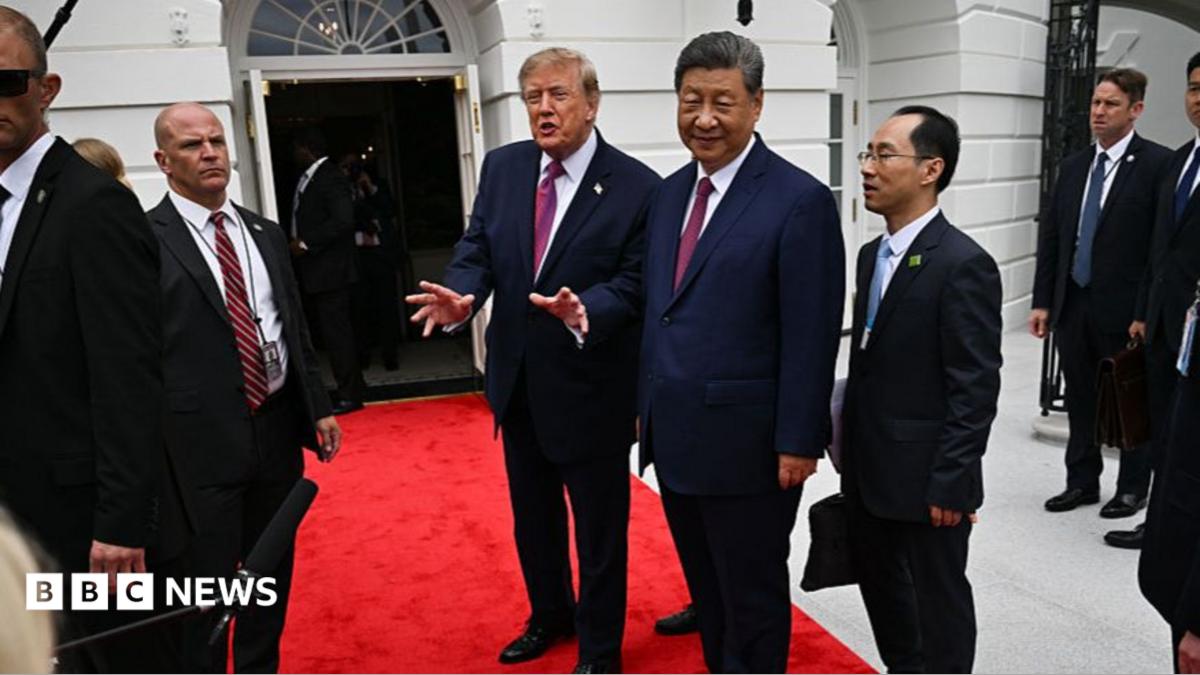



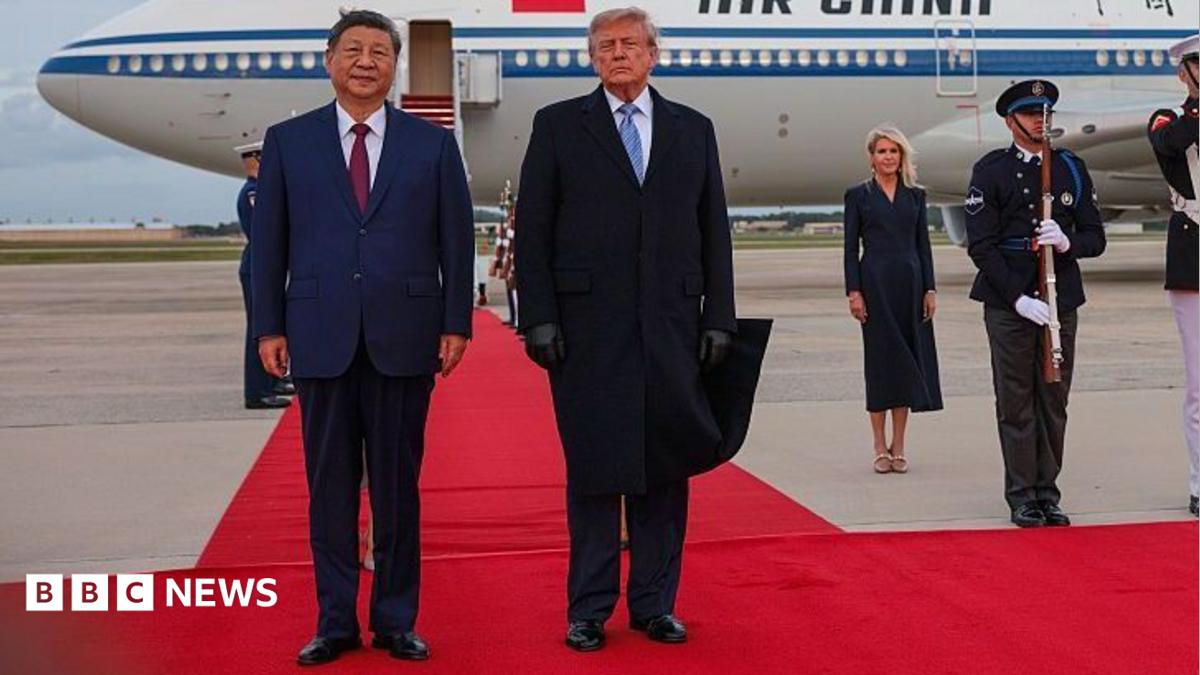
The uncomfortable truth for Xi is that his domestic economy is in trouble. While the country sells a record number of goods around the world, consumers at home are holding back. Youth unemployment remains stubbornly high and property prices have slumped in a country where 80% of people own their own homes.
Trade is helping to prop up growth, making access to overseas markets more important than ever. Xi needs to protect those exports from the kind of debilitating tariffs the US imposed last year.
On Taiwan, Xi once again made clear that US arms sales to Taiwan are a red line for China.
The US is bound by law to provide the self-governing island with the means to defend itself.
In May, Xi warned Trump that mishandling the issue could cause the two countries to “collide or even enter into conflict”.
Trump then delayed the approval of a $14 billion arms package for Taiwan, describing it as a “very good negotiating chip” with Beijing.
Xi may have seized on that opening during the talks and likely argued that restraining support for Taiwan reduces the risk of conflict.
On Thursday he reiterated his hope that the US would adhere to the “correct position” of opposing Taiwan independence.
However, Trump – who is coming under some bipartisan pressure to continue US support to Taiwan – is yet to make any public response to the Chinese leader’s comments.