




This is CNBC’s Morning Squawk newsletter. Subscribe here to receive future editions in your inbox.
Happy Monday. In the latest sign of the air travel industry’s focus on premium offerings, so-called budget airline king Bill Franke told CNBC that even he’s coming around to first-class seats.
Stock futures are rising this morning. The three major averages are coming off a mixed week.
Here are five key things investors need to know to start the trading day:
1. Flip of a switch
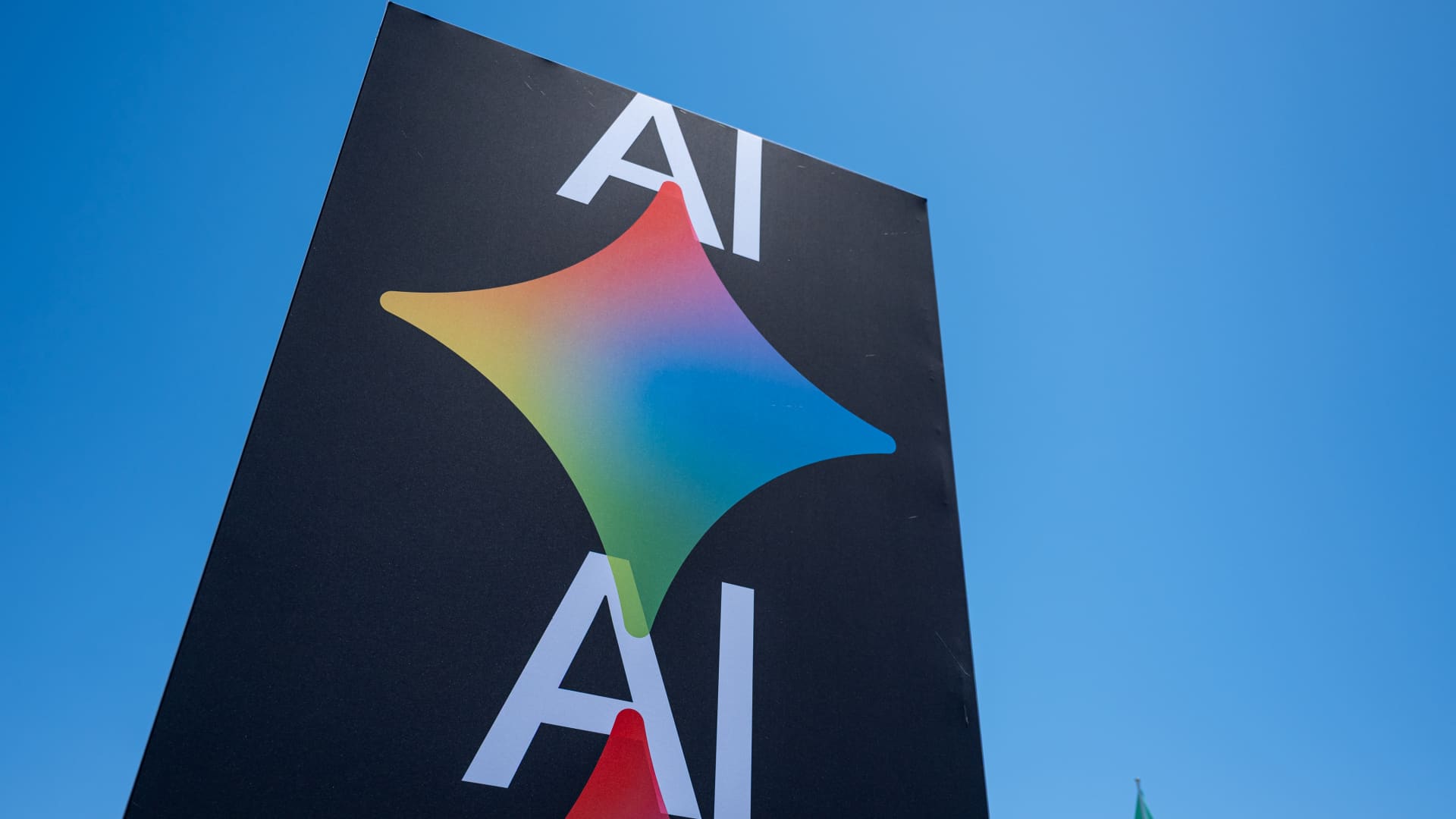
Gemini AI signage during the Google I/O Developers Conference in Mountain View, California, US, on Tuesday, May 19, 2026.
David Paul Morris | Bloomberg | Getty Images
The artificial intelligence safety debate continued to play out over the weekend. Technology leaders are forming alliances over the issue, while lawmakers are deciding how to respond.
Here’s what to know to start the week:
- Google added to safety fears on Friday when it revealed that its Gemini model hacked three other companies without permission. It’s the first time the company has disclosed such an incident.
- President Donald Trump, meanwhile, continued to call the outbreak of AI safety concerns a hoax. The president said on Saturday that he is forming an “AI Force” and will appoint an AI “czar,” but gave few details about either plan.
- As CNBC’s Kif Leswing and Ashley Capoot report, Nvidia CEO Jensen Huang has become a key ally for Trump as the two push back against calls for a development slowdown. Experts say that Huang exercises outsized influence in the White House.
- Tesla CEO Elon Musk said last week that he preferred to have companies regulate one another, rather than the government.
- More than 100 AI experts warned that they do not have enough resources and protections to adequately test AI models for safety.
- Elevated concerns about the potential for AI to harm humanity have placed renewed attention on the role of a “kill switch.” But as CNBC’s Samantha Subin writes, such a tool could be a logistical nightmare.
2. Summit prep
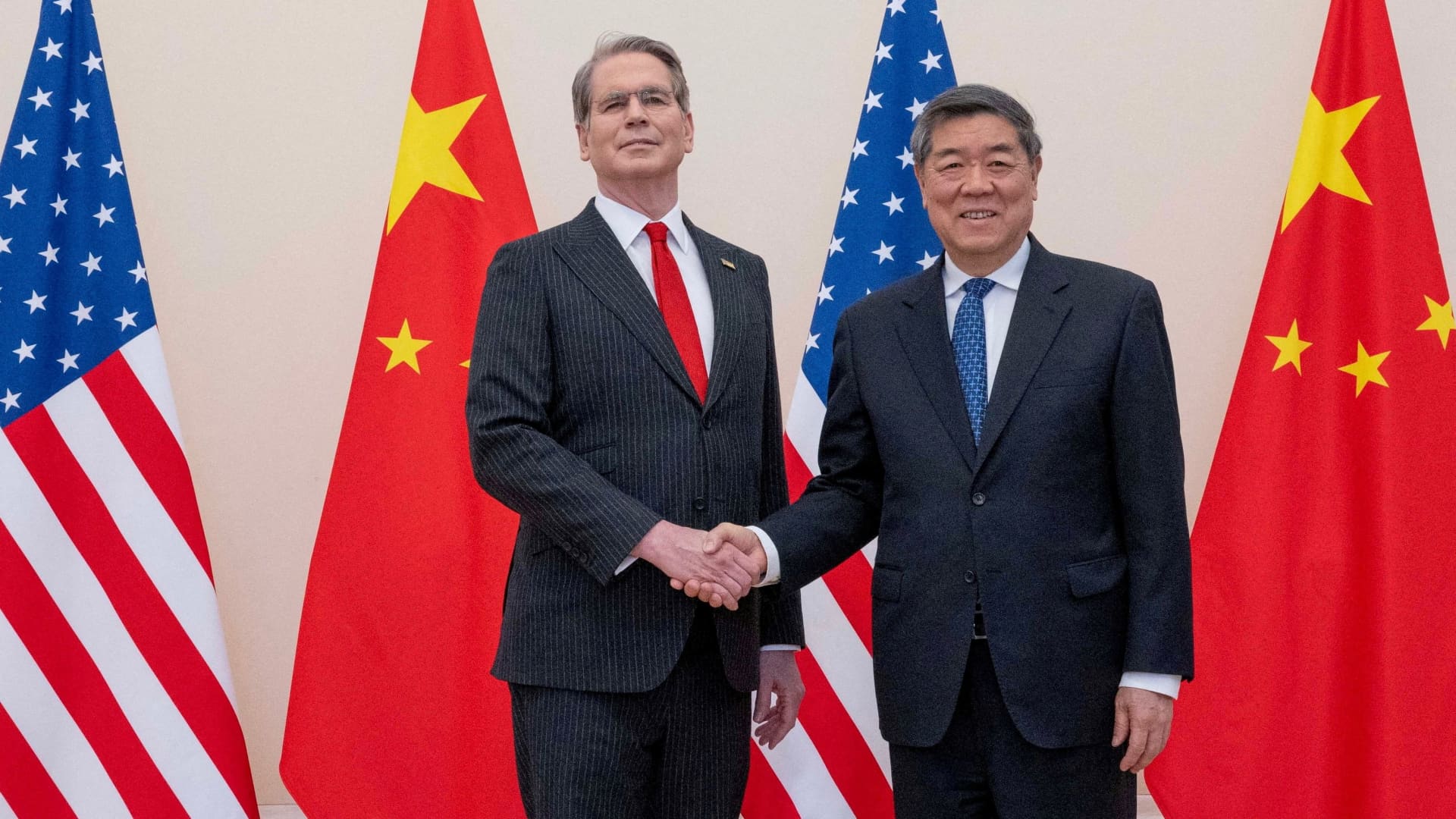
Scott Bessent, US treasury secretary, during a House Financial Services Committee hearing in Washington, DC, US, on Tuesday, Sept. 15, 2026.
Graeme Sloan | Bloomberg | Getty Images
3. White House ban
US President Donald Trump speaks to journalists before boarding Marine One as he departs from the South Lawn of the White House in Washington, DC, on March 20, 2026 for his Mar-a-Lago residence, where he will spend the weekend.
Brendan Smialowski | AFP | Getty Images
MS NOW, CNN and Politico will sue Trump after he banned the three outlets from the White House, saying in their lawsuit that the ban “could not be a more direct assault on the First Amendment nor a more blatant violation of our most fundamental constitutional principles.”
In a Truth Social post Friday, Trump said that he was banning MS NOW, CNN and Politico from the White House, citing their coverage of his administration. Journalists from the three media organizations were denied access to White House grounds over the weekend.
Trump previously attempted to block The Associated Press journalists from the Oval Office and Air Force One over the outlet’s refusal to follow Trump’s renaming of the Gulf of Mexico to the Gulf of America. This morning’s lawsuit is being filed in the same court where The AP’s lawsuit is pending.
4. Under pressure
Jim Nielsen puts the finishing touches on a radial arm saw at Original Saw Co. in Britt, Iowa.
Photo: Jennifer Eden
As tariffs, soaring fuel prices and rising interest rates snowball, U.S. businesses of all sizes are facing hard decisions.
But as CNBC’s Hugh Son, Leslie Josephs and Michael Wayland write, not all companies are impacted the same. Some firms can pass their rising costs on to consumers in the form of price hikes, but other businesses risk losing cash-strapped clientele if they lift prices too much.
Smaller and more leveraged businesses may feel the pinch of tighter monetary policy soon, especially given the Federal Reserve’s decision to increase borrowing costs last week. But large companies with cash piles and longer-term debt can avoid experiencing some of that pain in the near term.
5. Third gear
2027 Nissan Rogue
Courtesy Nissan
Nissan Motor wants to kick its U.S. production into high gear.
The automaker told CNBC that it could expand domestic manufacturing with the launch of its 2027 Rogue crossover. To do so, Nissan is considering adding a third production shift at its assembly plant in Smyrna, Tennessee. Such an expansion could result in hundreds or thousands of additional jobs.
At the same time, the Japanese automaker is launching a new hybrid model, which it sees as a key offering for U.S. car buyers. Christian Meunier, chairman of Nissan Americas, told CNBC that “the hybrid power that we’re launching on Rogue is going to really be the boost to our performance.”
The Daily Dividend
Here’s what we’re watching for this week:
- Monday: Trump meets with New York City Mayor Zohran Mamdani
- Thursday: Darden Restaurants earnings (before the bell); Costco earnings (after the bell); new home sales data for August; Trump-Xi summit in Washington, D.C.
- Friday: Consumer sentiment data for September
— CNBC’s MacKenzie Sigalos, Kif Leswing, Lora Kolodny, Ashley Capoot, Jonathan Vanian, Samantha Subin, Garrett Downs, Dan Mangan, Sean Conlon, Terri Cullen, Michael Wayland, Hugh Son and Leslie Josephs, as well as Reuters, contributed to this report.
Josephine Rozzelle edited this edition.
Disclosure: CNBC and MS NOW are divisions of Versant Media.