



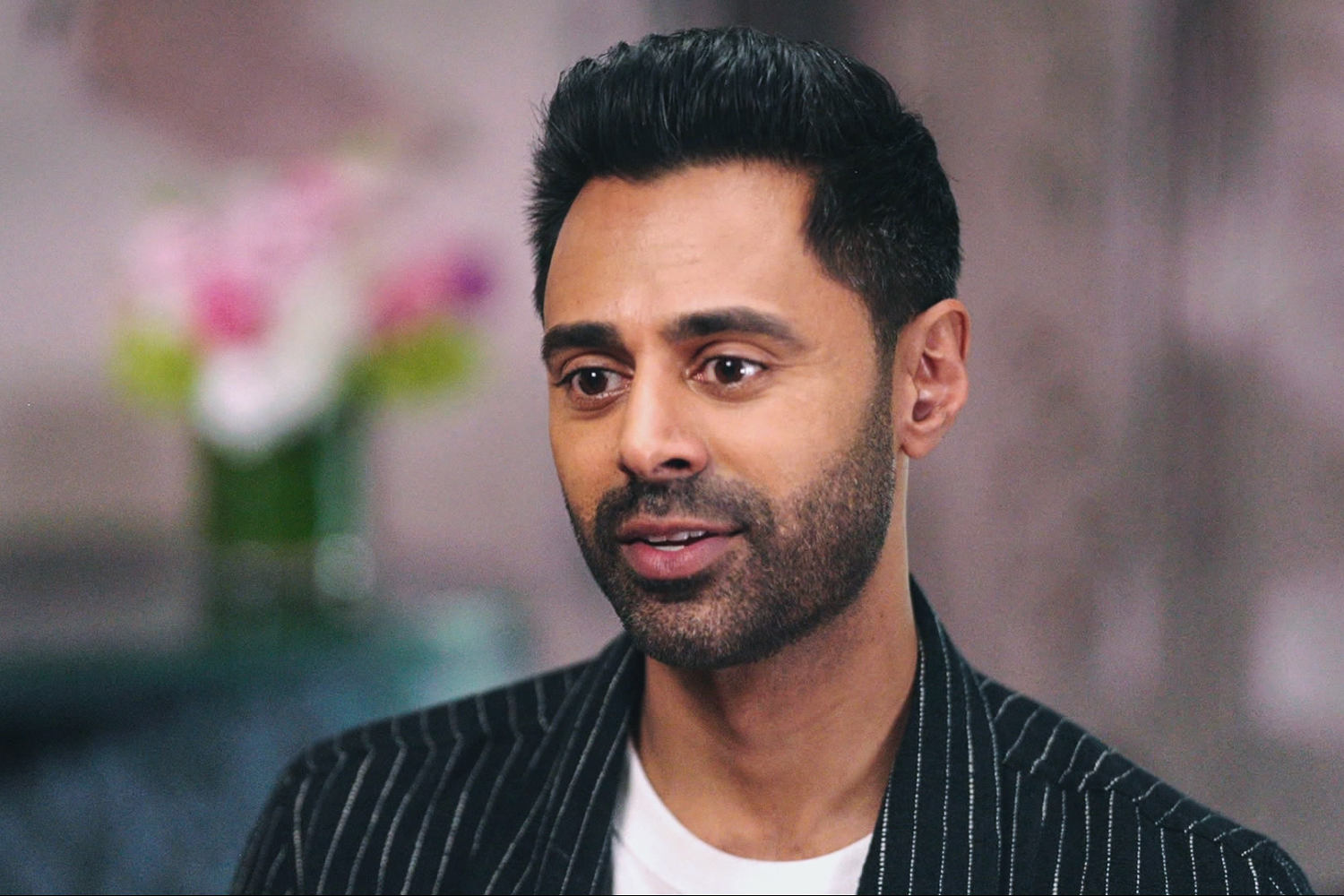
When he was growing up, Hasan Minhaj’s father told him to separate his Muslim background from his career. Years later, the comedian and actor has done exactly the opposite.
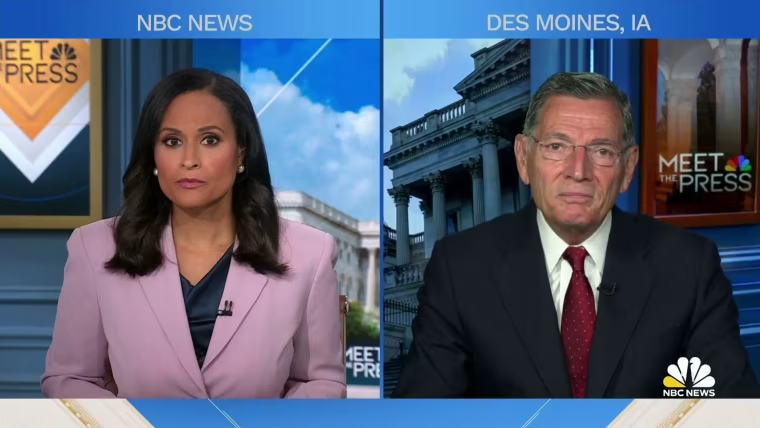
In an interview with “Meet with Press,” Minhaj reflected on how his upbringing as a Muslim and the child of Indian immigrants has been infused into his work. The comedian particularly recalled hosting the 2017 White House Correspondents’ Association dinner and seeing his father in the audience.
“I couldn’t have been more proud to be his son in that moment. I felt like, ‘Man, I hope you’re proud, and I hope you’re seeing that the house I grew up in, and the way we would talk about politics and the world, all of that influenced what I’m doing now,’” Minhaj said.
Minhaj praised New York City Mayor Zohran Mamdani, saying that it’s been an “incredible moment” to see the city’s first Muslim mayor in office.
“In the past, the way politics was kind of navigated was vis-à-vis this kind of negotiation. You give a little, give and take, be practical. And I think here in New York City, we got to witness, ‘Hey, I’m going to do it my way,’” Minhaj said. “What if I win, lose or draw, start a campaign literally from Jackson Heights, from Queens, from the forgotten boroughs of this city?”
Minhaj said Mamdani’s campaign reflects how “so many great stories are taken from the margins to the mainstream.”
“What’s beautiful about this moment is this is a moment for a lot of us to walk and act with moral clarity. ‘Hey, I’m not compromising my core beliefs. I’m walking through with this with clarity,’” Minhaj said.
Minhaj said that his identity and experiences inspired his latest project, a film he co-wrote and stars in called “Best of the Best,” which follows two childhood best friends as they join their university’s competitive Bollywood dance team.
“So for me this is a love letter to my community. It’s a love letter to my upbringing,” Minhaj said of the film. “I’ve been asked this question, ‘How did you come up with this world?’ And the crazy part is I didn’t. This world actually literally exists.”
Minhaj said one concept that he sought to articulate in the film is “izzat,” a Hindi word that means dignity and self-respect, a notion that he referenced as a response to Islamophobia.
He said when interviewing fellow comedian Kumail Nanjiani recently, Minhaj asked him whether he felt American, to which Nanjiani said, “It’s not about how I feel. It’s about the way the country sees me.”
“Your belonging in a group is about the way the group sees you. I thought that was really powerful,” Minhaj said.
“Izzat,” instead, means “it doesn’t matter what other people think of you,” Minhaj said.
“I think about my grandmother, who raised me. She literally went to school under British colonial rule in British Civil Lines. So she was not seen as a whole person,” he continued. “And she persevered despite that.”
Asked by moderator Kristen Welker about his own experience with Islamophobia, Minhaj said that he was “lucky I have this amazing platform.”
“I think about the taxicab driver. I think about the people who are being snatched up and detained by ICE. I’m thinking about the Senegalese immigrant who is waiting for his green card to go through,” Minhaj said.
Minhaj told Welker that while he’s worked through several mediums, from talk shows to film to podcasts, “comedy feels the most at home.” He said that while covering heavy topics, it’s essential to still prioritize laughter.
“Inherent within politics are obviously horrible things: war, destruction, famine, genocide,” Minhaj said. “I also want to say that isn’t what entirely makes us human. Laughter, joy and love are also part of the human experience.”