




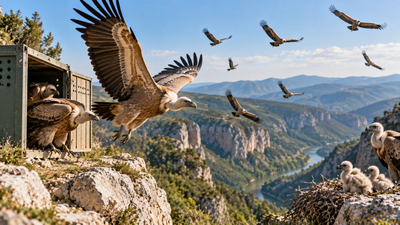
Bulgaria’s Griffon Vulture population has returned to Vrachanski Balkan Nature Park after more than 60 years without breeding there. Between 2010 and 2020, conservationists released 61 rehabilitated and captive-bred Griffon Vultures from Spain, France and European zoos as part of a long-term reintroduction programme. The effort eventually led to successful breeding in the wild, with 42 chicks fledging between 2015 and 2020. The comeback also established a local population of around 55–70 Griffon Vultures by 2020. Sustained monitoring, supplementary feeding and carefully managed releases helped restore a species that had disappeared as a breeding bird from the area.
Why did Bulgaria reintroduce Griffon Vultures after 60 years
According to the study published in PubMed, titled ‘Results of the re-introduction of the Griffon Vulture (Gyps fulvus) in Vrachanski Balkan Nature Park, Bulgaria – completion of the establishing phase 2010–2020’, the Griffon Vulture was once widespread across Bulgaria and was reported as numerous until the 1940s. In Vrachanski Balkan Nature Park, researchers found evidence that the species had nested at seven sites until around the 1950s. It later declined and became locally extinct as a breeding species around 1970. The study identifies poison baits used to control mammalian predators as a major reason for the decline.The reintroduction programme was developed after Vrachanski Balkan was identified as suitable because of its extensive inland cliffs, historical presence of Griffon Vultures and the capacity for local conservation management. Preparatory work included field surveys, test feeding and a viability study. The practical reintroduction began in 2010, when the first group of Griffon Vultures imported from Spain was released.
Bulgaria released 61 Griffon Vultures from European zoos and centres
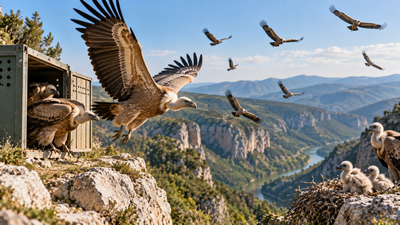
The released vultures were either wild-born birds from rehabilitation centres in Spain and France or captive-bred birds from European zoos. Juveniles, adults and immature birds were used. They were first kept in an adaptation aviary before being soft-released using a method developed in France.The researchers recorded 61 released vultures across the 2010–2020 reintroduction programme. The birds were individually marked with metal rings, PVC rings and wing tags so they could be identified and monitored. A supplementary feeding site was also established near the release area, with food provided at least twice a week. The feeding programme used livestock carcasses, including sheep, cattle, horses and pigs, as well as slaughter offal.
42 Griffon Vulture chicks fledged in the wild by 2020
The species took several years to breed. Researchers first observed breeding behaviour in the wild in 2013. In 2015, five territorial pairs were confirmed, and the first chick successfully fledged in the wild. The study notes that this was the first successfully fledged wild-born Griffon Vulture recorded among all active Griffon Vulture release sites in Bulgaria at that time.Breeding then increased during the following years. The study recorded four fledglings in 2016, six in 2017 and nine in 2018. In 2019, the number rose to 12 fledglings; the population was affected by a large-scale poisoning incident. In 2020, 18 territorial pairs were recorded, with 14 breeding pairs producing seven successful fledglings. Altogether, 42 chicks successfully fledged in the wild between 2015 and 2020.
Griffon Vulture population reached 70 birds
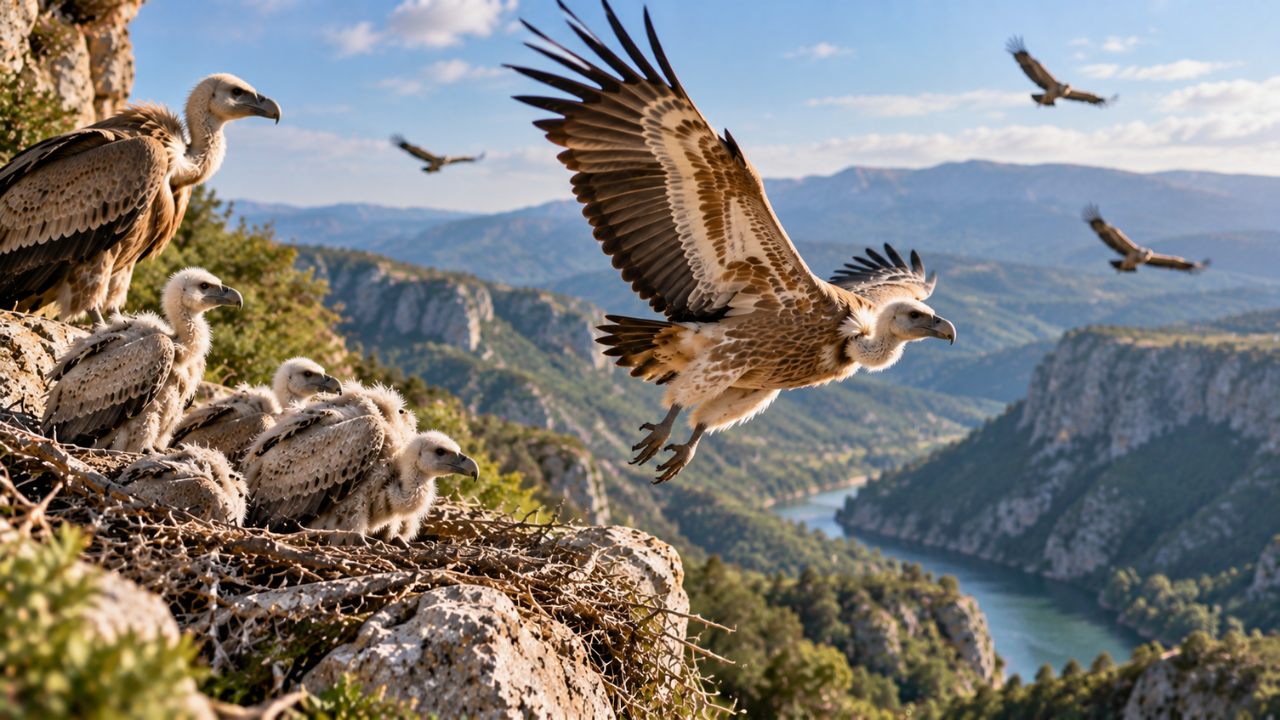
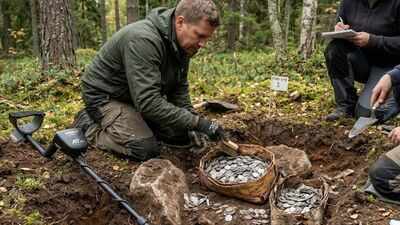
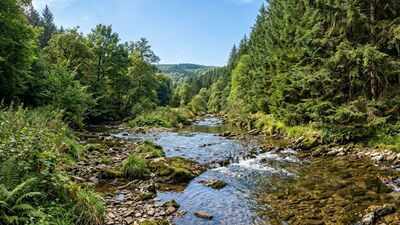
Image AI generated
By December 2020, the Griffon Vultures regularly present in Vrachanski Balkan Nature Park numbered about 55–70 individuals. The population included around 20–23 breeding pairs and occupied three to five separate colonies. The researchers also found that birds from other reintroduction sites and natural populations in places including Serbia and Croatia were visiting the area, making the park part of a wider Balkan Griffon Vulture population.The study concluded that the reintroduction had successfully established a new breeding nucleus in the park. However, the researchers stressed that the population was still vulnerable, particularly to accidental poisoning. They recommended continuing supplementary feeding and adaptive management while monitoring the population. The species therefore represents not the end of the conservation effort, but the completion of its initial establishment phase.