




After reaching the mains of several competitive exams without making the final cut, Harshit Sanguri found his calling in a remote primary school in Nainital’s Ramgarh block. He now teaches every subject to children from first to fifth grade, walks through a forested stretch to reach his school and spends his own time finding shoes and clothes for students who often have little to spare.When27-year old Harshit Harshit Sanguri, a primary school teacher in Uttarakhand looks back at his school years, there is one thing he remembers clearly, how it felt to be a child who was not heard. His eyes reflect the pain when he talks about the times his teachers would call his father to complain against him. His eyes well up and he confesses he becomes emotional whenever he things of those times.“There were occasions when I was scolded or beaten without fully understanding what he had done wrong. At times, I was called to the principal’s room and my parents were summoned. My father ran a shop close to the school, which made those moments even more embarrassing for me. I feel my teachers never paid attention, they were not bothered how kids felt, they didn’t care! As a child, it was heartbreaking, sometimes”
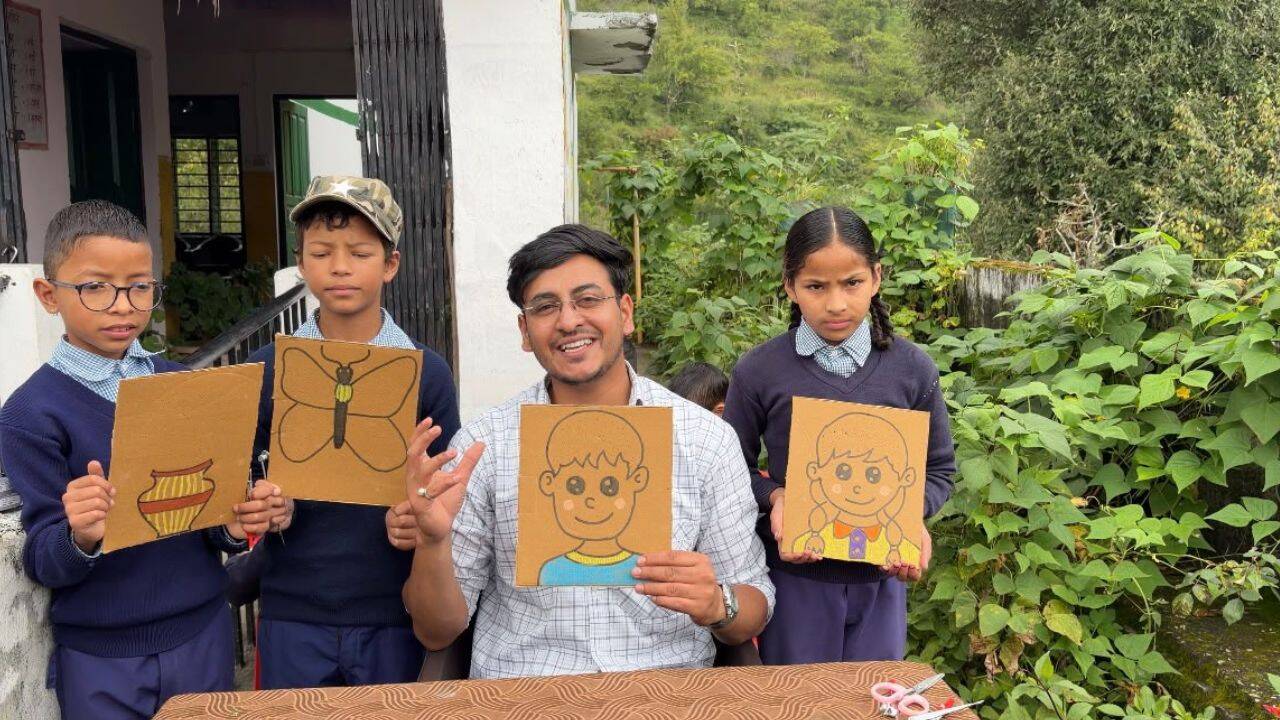
Image: Harshit Sanguri
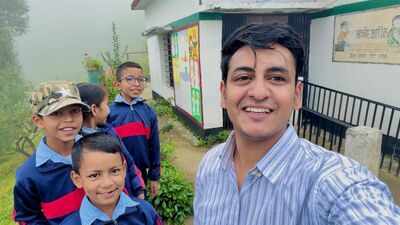
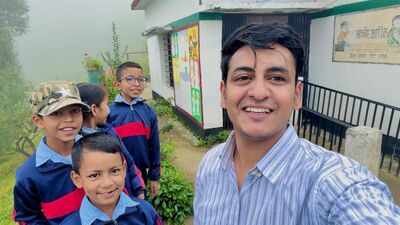
Years later, those memories have stayed with him. Today, Harshit is a teacher himself. And in a remote government primary school in Uttarakhand’s Nainital district, he is trying to make sure that the children sitting in front of him never feel the way he once did. The school, located in the Ramgarh block, has just nine students. Harshit is its only teacher. The setting is as remote as the numbers suggest. From the roadside, it takes him around 15–20 minutes on foot to reach his room, through a forested area. The school is another 15–20 minutes away.“It is a part of the hills where many families have moved away over the years, partly because of the lack of basic infrastructure and road connectivity. With fewer families remaining in the villages, the number of children in the local school has also steadily fallen,” says Harshit.“I come from a middle class family, but I was still privileged, but these children come from extremely poor families. They wear the same uniform for years if the government supply does not come, they have tattered shoes and insufficient clothing considering the harsh weather conditions.”When Harshit joined, there were 10 students. Three children in Class 3 and three in Class 5 eventually moved on, while new admissions did not make up the numbers. The school now has nine children from Classes 1 to 5. “But nine children do not mean nine times less work. As a primary teacher, I have to teach all the subjects — English, Hindi, mathematics, Environmental Studies and Sanskrit- across five classes. Whether there is one child in a class or four, the syllabus still has to be completed,” he explains. “You have to keep track of every child, every subject, who is falling behind and whether everyone is keeping up.”
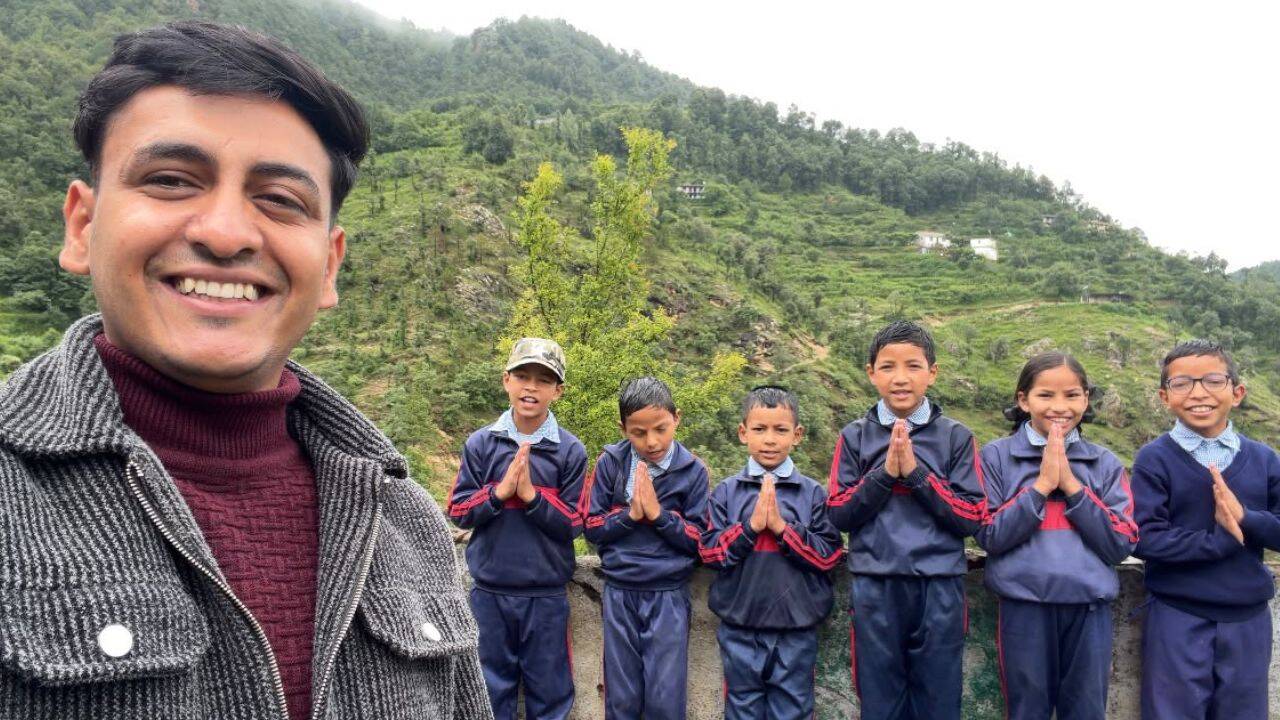
Image: Harshit Sanguri
Being the only teacher brings another challenge- even taking a day off is difficult. There is no colleague who can simply take over his class. Finding a replacement willing to travel to such an interior location is not easy either. Government duties have occasionally added to the challenge.Yet Harshit does not speak about his posting with resentment. He loves his job and he is grateful that the authorities think about this school and have posted a teacher here for 9 children. “Actually most people are not willing to take up a job in remote areas, even the authorities face challenge here.”
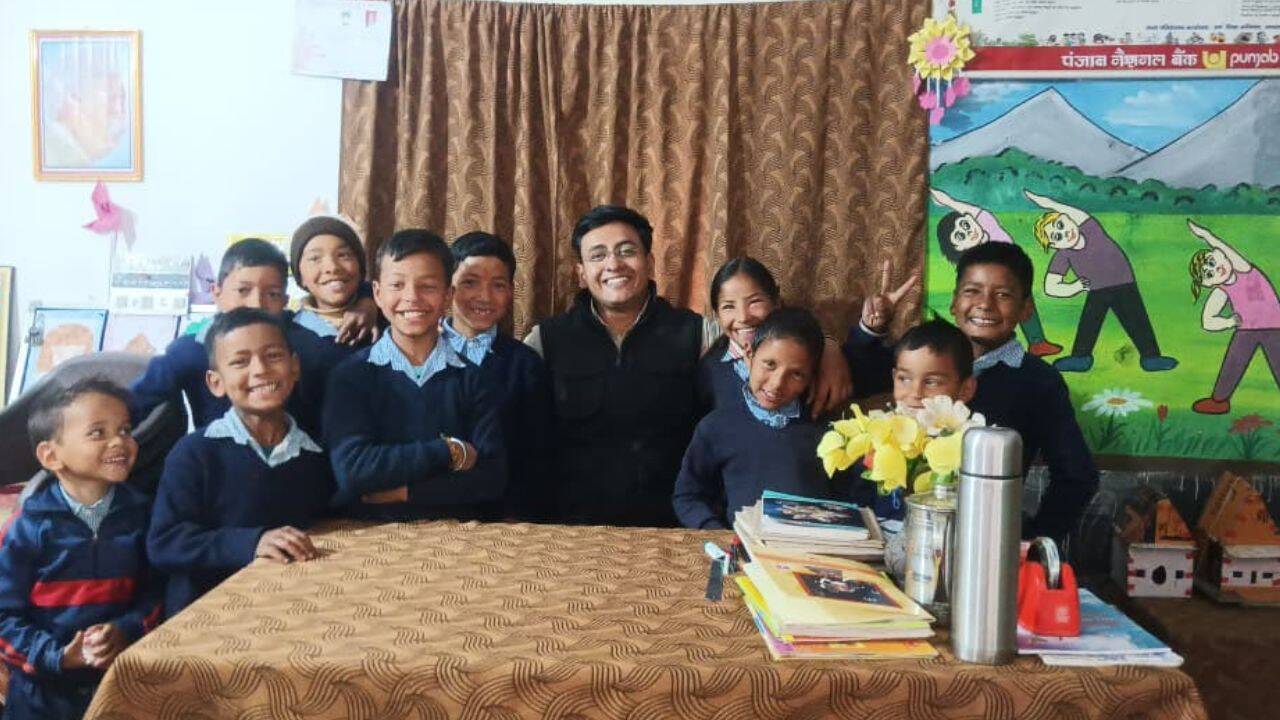
Image: Harshit Sanguri
From government-job aspirant to teacherTeaching was not Harshit’s first plan. After Class 11 and 12, he began his graduation but was uncertain about what career he wanted. Like many young people from middle-class families, he was encouraged to pursue a secure government job. “I was not very good in studies and was weak in several subjects and my parents wanted me to try for a government job. I did not want to disappoint them so I eventually travelled to Haldwani for several months of coaching for the Staff Selection Commission examinations. But I soon realised that MY basics were not strong enough. So I returned home and began studying on my own. For the next couple of years, my routine revolved almost entirely around preparation. I would wake up at around 5 am, study through much of the day and take breaks mainly for meals.”Harshit appeared for several examinations, including SSC and Uttarakhand government recruitment exams. He cleared the mains of exams such as SSC CGL and CHSL and reached the mains stage of Uttarakhand Public Service Commission examinations. He also cleared stages of the Patwari recruitment process, including the physical test. But the final selection remained elusive.
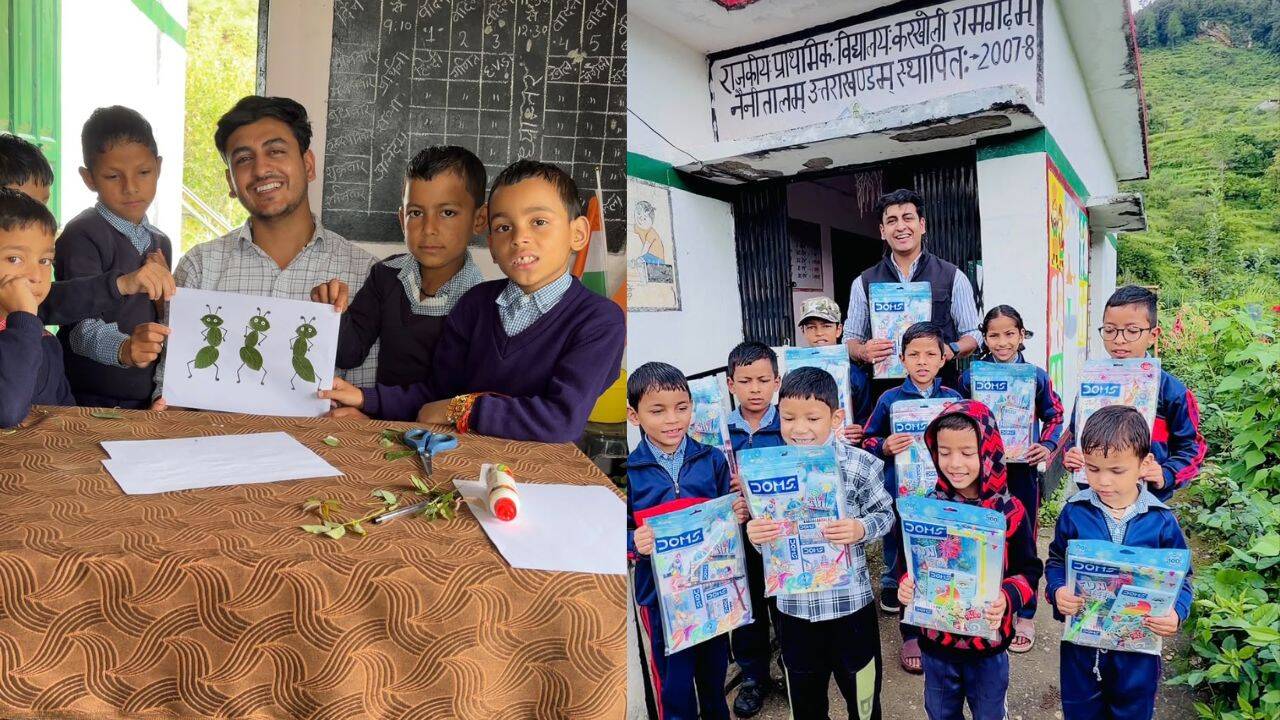
Image: Harshit Sanguri
Then came an examination he had not initially imagined would change his life: D.El.Ed. The Diploma in Elementary Education (D.El.Ed.) is a two-year professional teacher-training course designed to prepare educators for primary and upper-primary classes (I to VIII). He took the exam while still looking for a route into a government job. His earlier preparation in mathematics, reasoning, Hindi and general knowledge helped him perform well. He secured a top rank and was allotted a DIET in the Nainital area, allowing him to continue living at home.He completed his D.El.Ed in early 2025. About a year later, in January 2026, he finally became a government school teacher. And somewhere between entering the classroom and getting to know his students, Harshit realised that he had found something he had not been looking for. He liked teaching.He liked talking to the children, joking with them and understanding how they thought. More importantly, he realised that his own difficult experiences as a student could help him become a different kind of teacher.Nine children, one teacher and a lot more than lessonsMany of the children at his school come from financially struggling families. Some do not have multiple sets of school uniforms. In some cases, a single uniform may have to last for a very long time.
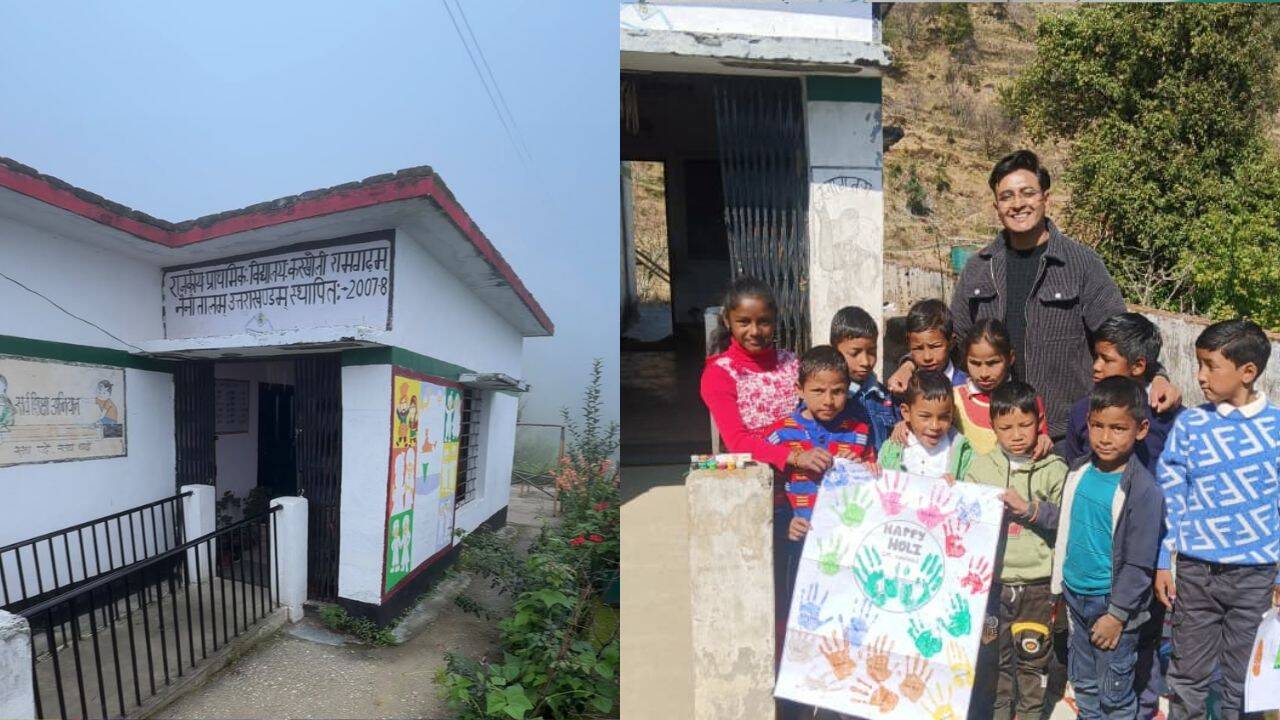
Image: Harshit Sanguri
For Harshit, these are not details that can simply be ignored because they fall outside a teacher’s formal job description. If the children need shoes, he tries to find shoes. If they need clothes, he tries to find clothes. He began sharing glimpses of school life on Instagram for another reason to show people what education looks like in a remote Himalayan village and allow them to see the children and their surroundings.The response gradually grew. People began connecting with the children and offering support. Parents were happy when the children received things they needed. Villagers, too, began taking pride in the attention their small school was receiving. For Harshit, the social media presence became less about himself and more about giving the children a window to the outside world.His parents are proud of it too. His father, who still runs a general provisions shop, regularly watches the videos and shows them to Harshit’s mother. He could prepare for a bigger job. He has chosen not to for now. There is still pressure from relatives to aim higher.
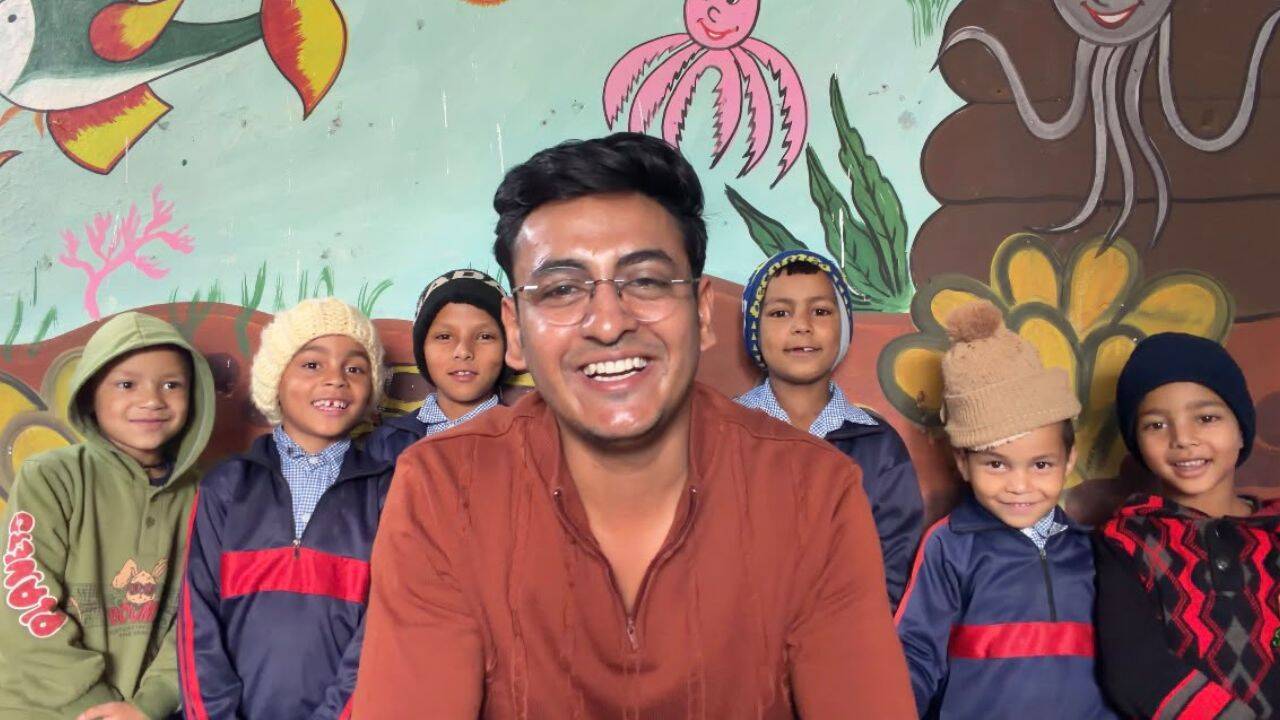
Image: Harshit Sanguri
Some have encouraged Harshit to prepare for other government examinations or pursue further academic qualifications. But he says he does not currently have the time as he is totally committed to the 9 kids who are entirely dependent on him for their education. “I am enjoying this,” he says.He does not talk about the job primarily in terms of salary, promotion or status. His satisfaction comes from being useful to the children.Whether he remains at this school or is eventually transferred to another, he says he would like to continue doing the same thing: working for the children in front of him. The number of students may change. The school may become fuller or emptier. His posting may change.But the reason he wants to teach has already become clear. He remembers what it felt like to be a child who needed a teacher to understand him.Now, in a quiet corner of the Uttarakhand hills, he is trying to become that teacher for someone else.