




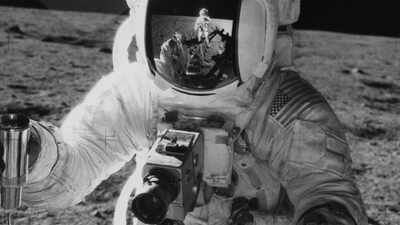
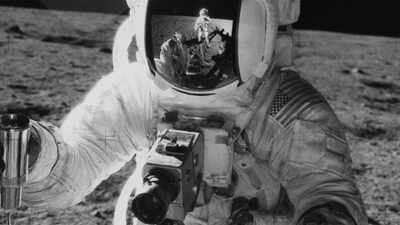
Imagine finally getting a colour television camera onto the Moon, knowing millions of people back on Earth were waiting to see the astronauts at work – and then accidentally pointing it straight at the Sun.That is more or less what happened during Apollo 12 in 1969.In November 1969, astronaut Alan Bean was setting up a brand-new colour television camera on the lunar surface when its lens briefly passed over the Sun. The intense sunlight damaged the camera’s vidicon tube, effectively killing the live television feed.And just like that, viewers on Earth lost their colour view of the Moon.
Why the camera was such a big deal
Apollo 11 had already given the world its historic first look at humans walking on the Moon just four months earlier. But those pictures were in black and white.For Apollo 12, NASA wanted to do better.The mission carried a colour television camera made by Westinghouse, which was intended to give viewers a clearer and more vivid look at astronauts Pete Conrad and Alan Bean as they worked on the lunar surface.Getting the camera into position was part of Bean’s job.According to the National Air and Space Museum, he removed the camera from its bracket on the lunar module Intrepid, moved it away from the spacecraft and placed it on a tripod.That’s when things went wrong.
Bean didn’t deliberately point it at the Sun
The incident wasn’t some reckless mistake.Bean was trying to position the camera so it could capture the lunar module. During the process, however, the camera’s lens passed across the Sun.The sunlight hit the sensitive vidicon tube inside the camera and damaged part of its target. The damage was permanent.At first, Bean apparently suspected that something had gone wrong with the camera’s colour wheel. He even tapped the equipment in an attempt to get the picture working again.It didn’t help.The damage had already happened.A later examination of the television record confirmed that Bean had pointed the camera towards the Sun while mounting it on the tripod.
And that’s why Apollo 12 has so little live Moon footage
The timing couldn’t have been worse.The colour camera had barely started doing its job when it was effectively knocked out. So unlike Apollo 11, which left behind iconic television footage of astronauts walking on the lunar surface, Apollo 12 has very little surviving live TV footage from its moonwalk.That doesn’t mean the mission wasn’t documented.Far from it.The astronauts took thousands of still photographs using 70mm film. A 16mm camera mounted on the lunar module also captured some moving footage of Conrad and Bean working on the Moon.But the live colour television broadcast NASA had hoped would give the public a much better view of the mission was gone.
NASA changed how astronauts handled the cameras
The mishap also became a useful lesson for later missions.For Apollo 14, NASA flew the same basic type of Westinghouse colour camera but added a lens cap and introduced stricter procedures for handling and positioning it.Then, from Apollo 15 onwards, NASA made a bigger change. Control of the colour television camera was handed over to Mission Control rather than leaving astronauts to operate it themselves.That meant astronauts could concentrate on their work while controllers on Earth handled the camera’s movements.So, a small accident during Apollo 12 in 1969 ended one of the mission’s most anticipated broadcasts, but it also helped NASA rethink how cameras would be operated on future Moon missions.