


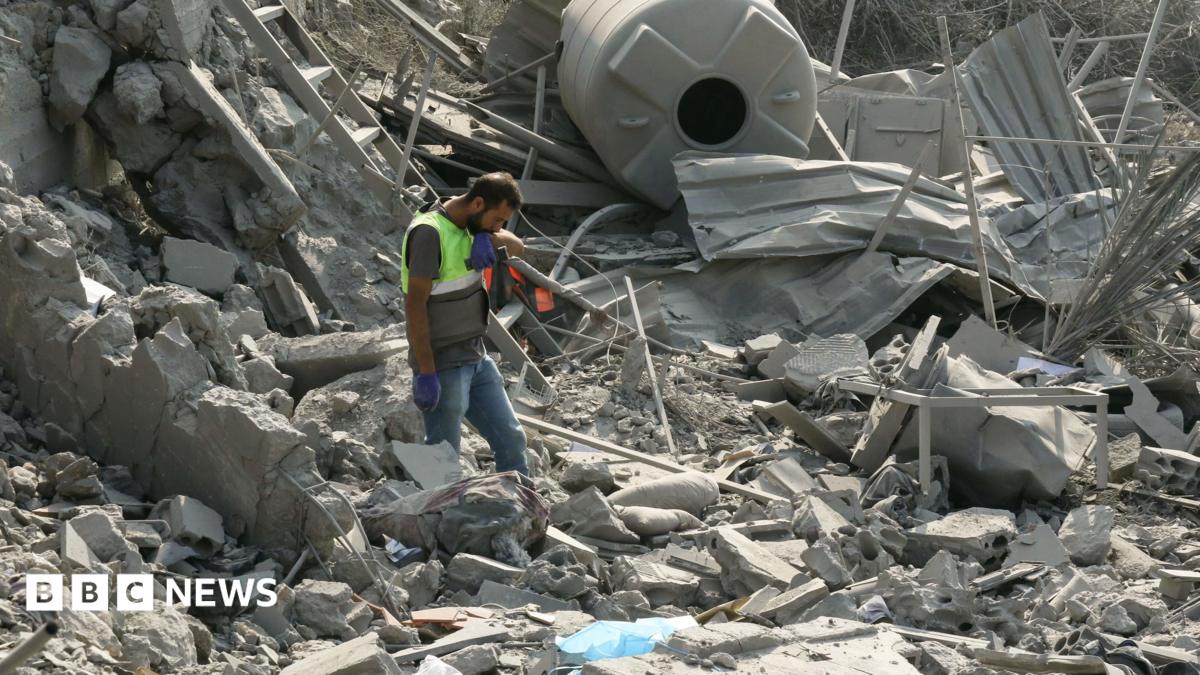
An Israeli air strike has killed seven people in southern Lebanon, the nation’s prime minister has said, in one of the deadliest attacks since an agreement aimed at reducing hostilities was announced in June.
The strike hit a house on the outskirts of Ansar at about 04:30 (01:30 GMT), in the Nabatieh district, where authorities say displaced families were living. Those killed included three children and two women, Lebanon’s state-run news agency reported.
Israel’s military said it had struck “Hezbollah terror infrastructure” in response to what it described as an earlier action against its soldiers.
The attack came as Israeli strikes intensified across parts of southern Lebanon overnight.
Later on Saturday morning, another round of strikes hit the town of Deir al Zahrani, killing two and injured nine others, according to the Lebanese ministry of health.
Social media footage shows large plumes of grey smoke permeating through the streets of the village as sirens ring in the background.
Lebanon’s Prime Minister Nawaf Salam condemned the attacks, saying the civilians killed were not “military infrastructure”.
“Israel must halt this escalation,” he said. “For the security of our people and their right to life on their land are not subject to negotiation or bargaining.”
The Israel Defense Forces (IDF) said the incident that had prompted its strike on Ansar took place in the Ali al-Taher Ridge, a strategic high ground overlooking much of south-eastern Lebanon and of the war’s most fiercely contested positions.
Lebanon’s state-run National News Agency (NNA) also reported a series of strikes around the ridge.
Near the border, several homes were reportedly destroyed in Bint Jbeil, while Israeli forces opened heavy machine gun fire towards houses, according to NNA.
Lebanon was drawn into the war between Israel, the US and Iran on 2 March, when Hezbollah – the armed group affiliated with Iran – launched rockets into Israel in retaliation for a strike that killed Iran’s supreme leader.
Israel responded by launching a bombing campaign across Lebanon and invading a significant part of the country’s south. Its forces continue to occupy roughly 5% of Lebanese territory.