



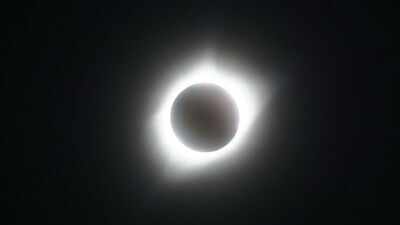
A rare and intriguing astronomical event is set to occur on August 12, 2026, when a total solar eclipse will be visible from some places in the Northern Hemisphere. According to information shared by NASA Science, during this event, an unusual path will be traversed by the shadow of the Moon, a variety of time durations will occur, and an array of fascinating views will be seen by people. However, while some regions will see the total eclipse, in others, only a partial eclipse will be visible.
5 unusual facts about the August 12 solar eclipse:
The eclipse will cross through several continents and remote areasThe Moon’s umbral shadow (the region of total darkness) will travel over Greenland, Iceland, northern Russia, the Atlantic Ocean, Spain, and a tiny sliver of Portugal. Meanwhile, the rest of Europe, most of Canada, and all of the United States will see a partial eclipse.One of the rarest “sunset eclipse” opportunitiesFor observers in mainland Europe and northwest Africa, the Sun will be partially eclipsed, even as it sets in the west. Such a phenomenon is called a “sunset eclipse” and is a rare treat that occurs when an eclipse occurs near sunset or sunrise.The duration of totality will be less than two minutes in most placesIn the areas listed above, people will see only a partial eclipse, while those in the limited path of totality will see the Moon cover the entire Sun for less than 2 minutes. Although this might not seem a long time, for those in Greenland, northern Russia, and the North Atlantic, it might last close to 2.5 minutes. Nevertheless, this will be the maximum for all observers.The time of day will vary depending on the locationAs aforementioned, the time when the solar eclipse will be visible will differ from place to place. For instance, in northern Russia, it will be visible around noon, while in Greenland and Iceland, it will occur later in the afternoon. Additionally, in Spain and the western part of Portugal, the solar eclipse will be visible near sunset.Also read:Jockey Juniors Times NiE Colour Splash Contest returns with a grand showcase of young creativityNational Cousins Day: Celebrating the family members who often become lifelong friendsOnly during totality can one look directly at the SunReports suggest that it is the only time when it is safe to do so since the Moon will entirely cover the Sun. However, outside of this period, one must use special solar viewing eyewear, not regular sunglasses, to avoid eye damage. Another safe way of watching the event is using a pinhole camera. Moreover, for those who cannot see the solar eclipse with their own eyes, NASA will have a live broadcast of the event.In addition to the total solar eclipse, a partial eclipse will occur everywhere else. For observers in Alaska and Canada, it will be seen in the morning, while in the United States, it will be visible around noon. It will happen in the late evening for those in Europe and Africa. In particular, the Sun will be entirely covered in parts of northern Africa and Spain.