



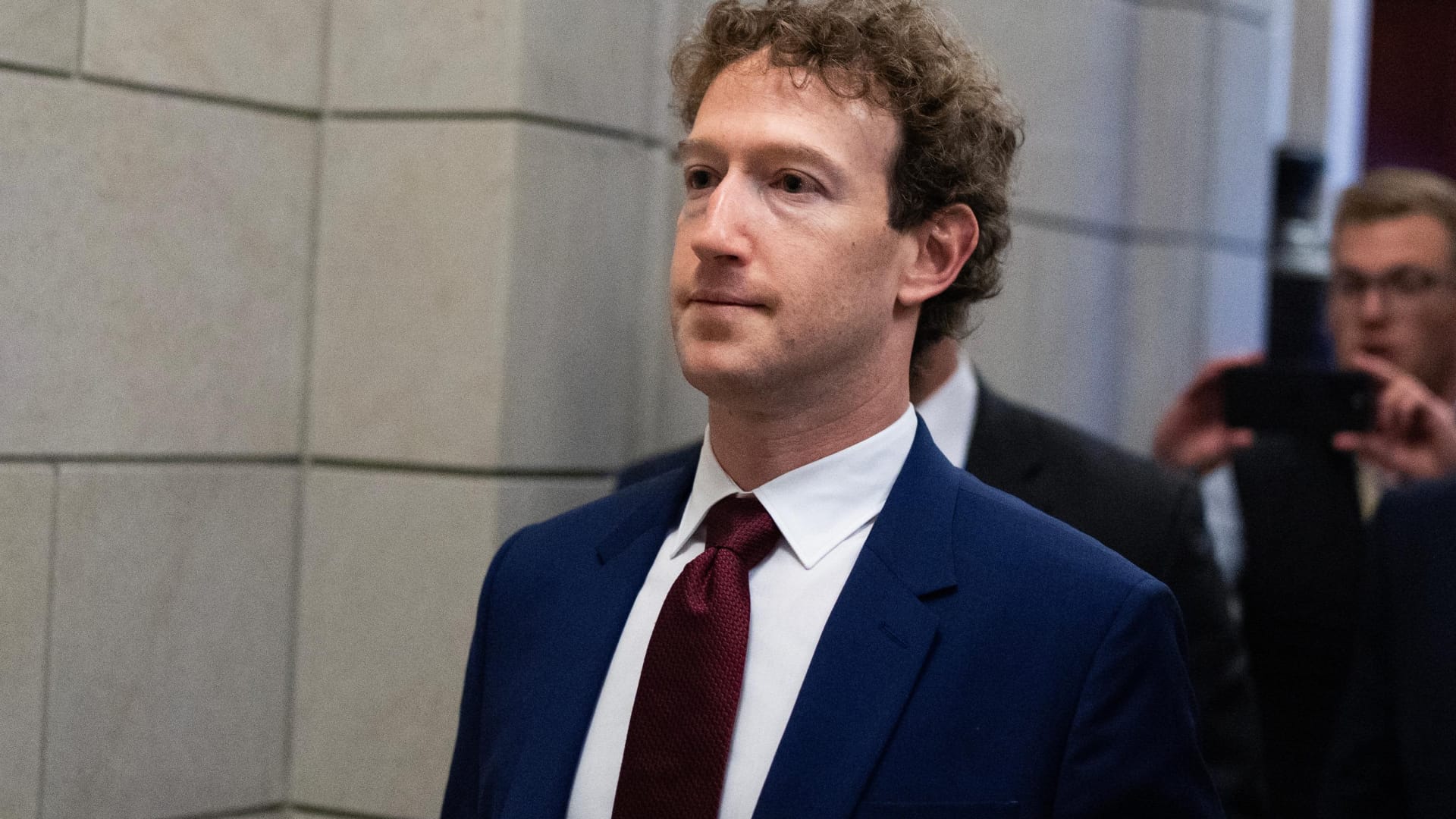
Meta was ordered to pay $567 million into an abatement fund in New Mexico as part of a public nuisance case that’s just one of many suits the company faces related to alleged harms caused by its apps.
The fund comes on top of the $375 million in civil penalties that Meta was forced to pay earlier this year when it was found to have violated New Mexico’s unfair practices act. The second phase of the trial, which began in May, would establish if Meta’s actions created a public nuisance, thus warranting potential product changes.
“Although Meta is not alone in this regard, its social media platforms are a significant contributing factor to the current mental health crisis among New Mexico’s youth established by the substantial evidence in this case,” Judge Bryan Biedscheid wrote in the ruling on Thursday.
Most of the money in the fund — $420 million — is dedicated to treatment for people harmed by the platform. The rest is for awareness and prevention, screening and assessment and referrals and coordination, as well as implementation, quality improvement and evaluation.
The court had to weigh a number of factors in order to determine whether Meta’s platforms created a public nuisance in New Mexico, as alleged by plaintiffs. As legal experts previously told CNBC, cases involving public nuisance claims have typically centered around the physical world as opposed to the Internet, putting the burden on the plaintiffs to correlate harms in the state to Meta’s apps.
Biedscheid highlighted trial testimonies from various professionals in fields like healthcare to as part of determining that “social media platforms, including Meta’s, bear responsibility for the current youth mental health crisis in New Mexico.” The judge noted that one expert “attributed the shortage of healthcare resources to ‘the impacts of social media on our children,’ and described that the state lacks the appropriate number of mental-health related programs and services to help troubled youth whose mental well-being was allegedly damaged by social media apps.
“Expert testimony supports a causal link between social media and the youth mental health crisis in New Mexico,” the legal filing said.
“For years, Meta knew its platforms were harming New Mexico’s kids, from feeding a youth mental health crisis to connecting predators with children, and it chose engagement and profit over their safety,” New Mexico Attorney General Raúl Torrez said in a statement. “Today, Meta is paying for that choice. This judgment holds the company accountable for the damage it caused to our children, our families, and our schools, and it forces real changes to how Meta operates in New Mexico.”
A Meta spokesperson told CNBC in a statement that it disagrees with the ruling and plans to appeal.
“We work hard to keep people safe on our platforms and have been transparent about the challenges of identifying and removing bad actors and harmful content,” the Meta spokesperson said. “We remain confident in our record of protecting teens online and will continue to defend ourselves against claims that misrepresent the facts.”
For Meta and its peers, the case is one of several this year that experts have characterized as social media’s “Big Tobacco” moment. In the 1990s, tobacco companies were forced to pay billions of dollars for misleading the public about the safety and potential harms of their products, and subsequently saw their power and influence dwindle dramatically.
Meta noted in its second-quarter financial filing that, “the New Mexico Attorney General has indicated that they intend to seek up to $62.85 billion in penalties in this case.”
Torrez sued Meta in 2023 following an undercover operation involving the creation of a fake social media profile of a 13-year-old girl that he previously told CNBC “was simply inundated with images and targeted solicitations” from child abusers.
As part of the case, Torrez was seeking to force Meta to overhaul its apps by implementing features like effective age-verification technologies, altering recommendation algorithms that don’t compromise child well-being and making other modifications that result in “fundamentally restructuring how Meta is allowed to do business in the state,” the AG said at a press briefing before the second phase of the trial began.
In addition to the abatement fund, Thursday’s order requires Meta to continue improving “age assurance models and tools in New Mexico” using AI, and to attempt “to develop, within two years, a dedicated under-13-years-of-age prediction model.”
Other remedies include making it easier to report underage usage, and partnering “with schools or a child safety organization to create a reporting portal where school administrators can flag suspected accounts where users may be under 13 years of age across any social media platform.”
The judge noted that WhatsApp “is not a contributing cause to the public nuisance being abated, as predators and harmful content are not recommended to adolescents on that site.”
WATCH: Meta’s stock pullback justified, says Needham’s Laura Martin