




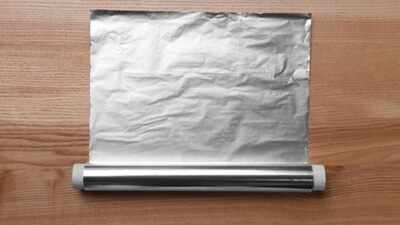
Wrapping leftovers in foil is such an automatic kitchen habit that most people never stop to ask whether the food underneath actually likes being there. For a large category of everyday dishes, tomato-based curries, citrus marinades, anything with a splash of vinegar or wine, it turns out the answer is genuinely no. Acidic ingredients speed up oxidation when they come into contact with aluminium, gradually causing the foil to pit and weaken while leaving behind a faint metallic taste in the food. It’s one of the most common kitchen mistakes precisely because it looks harmless, the food goes in fine, and it’s only later, at the next meal, that something tastes subtly, unmistakably off.
Which foods trigger it the most
Some ingredients are far more likely to set this off than others, and the pattern is consistent across food science sources. Tomatoes, citrus fruits, vinegar, and wine-based sauces are the classic offenders, since their high acidity actively speeds up the corrosion process when they sit in direct contact with foil. Salt compounds the problem in a similar way, meaning cured meats, aged cheeses, and heavily salted leftovers carry much the same risk as acidic dishes do. Marinated meats are arguably the worst combination of all, since a typical marinade brings both acid and salt together at once, giving the reaction two accelerants working simultaneously rather than just one.
How bad does it actually get?
The effect isn’t uniform, and a few specific factors determine how noticeable it ends up being. Food science research has identified acidity, salt content, temperature, fat content, and contact time as the five main variables that determine how much aluminium actually transfers from foil into food, with low pH and high heat acting as the two biggest accelerants. A student research project that measured this directly found aluminium concentrations reaching as high as 14.4 parts per million in lemon juice left in contact with foil, with heating the mixture noticeably speeding up how quickly that concentration built up. In practice, this means a quick, cool covering does far less damage than a dish left wrapped tightly and warm overnight.
Is there a health angle, or just taste?
It’s worth separating the two issues clearly, since they don’t carry equal weight. From a safety standpoint, the amount of aluminium that actually transfers during typical home storage is generally low and considered safe by food scientists, even though the flavour effect is real and does worsen the longer the contact lasts. That said, it’s not an entirely closed question either; some research has looked at broader dietary aluminium exposure over time, which is part of why food safety experts still recommend limiting prolonged, direct contact between foil and acidic or salty foods. The honest takeaway sits somewhere in between: an occasional slip won’t hurt you, but making it a repeated habit is worth avoiding.
Simple fixes that avoid the problem entirely
None of this means giving up on foil altogether, since the fix is genuinely simple. A layer of parchment paper between the food and the foil breaks the direct contact that drives the reaction, and switching to glass, ceramic, or stainless steel containers for anything acidic, salty, or marinated sidesteps the issue completely. If foil is genuinely the only option on hand, keeping the contact time short and the food cool rather than warm limits how much reaction actually has a chance to happen. Foil still earns its place in the kitchen for dry, low-acid foods; it’s really only this specific combination of acid, salt, heat, and time that turns a convenient habit into a flavour problem.
Disclaimer
This article is intended for general informational purposes only and is not a substitute for professional food safety or medical advice. Aluminium exposure from typical home cooking and storage is generally considered low-risk, but if you have specific health concerns about dietary aluminium intake, consult a doctor or registered dietitian.