




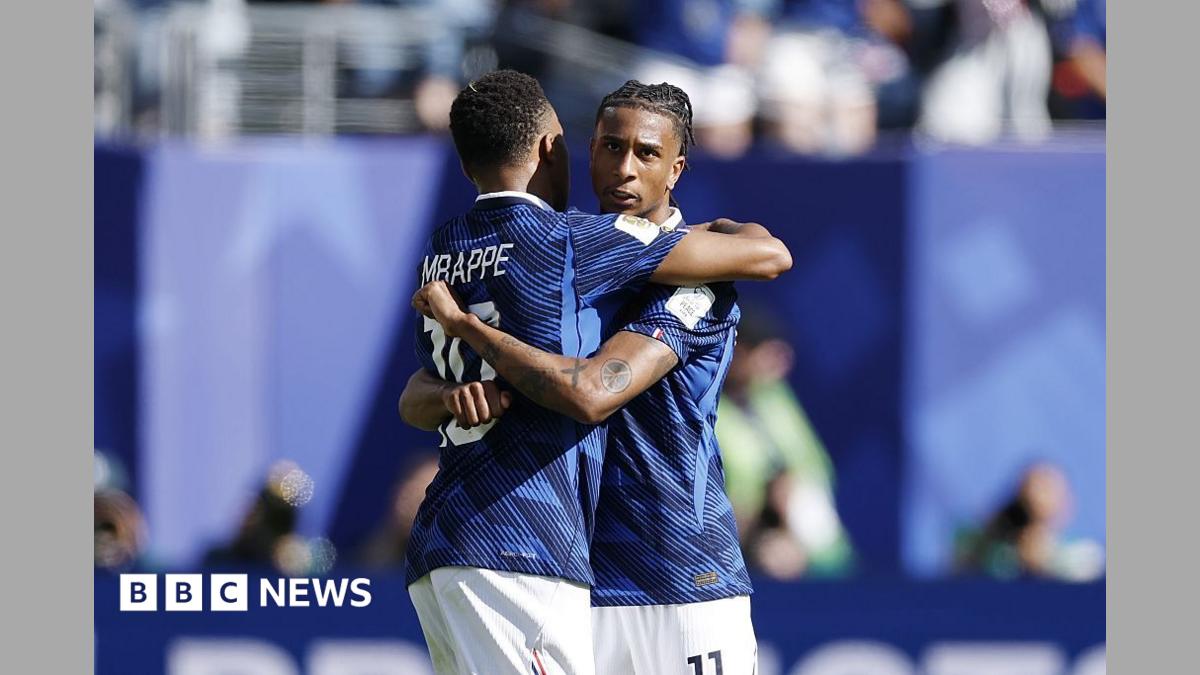
Dr Cherti says footballers’ choices can be shaped by “professional, emotional and political considerations”, including family expectations or international opportunities they might not otherwise have had.
For example, Ibrahim Mbaye had played for France at all youth levels, but made the surprise announcement last year, aged 17, that he would play for Senegal, his mother’s birth country.
“I will never regret choosing to play for Senegal because it was a decision from the heart,” he told Senegalese broadcaster RTS at the time.
Others, such as former Real Madrid defender Pepe, opt to represent the country in which they have become naturalised.
According to Brazilian media citing his father, Pepe turned down an approach about representing Brazil in 2006 and instead chose Portugal, where he had been living and playing since 2001.
He ended up facing his birth country in a heated group stage match at the 2010 World Cup.
“I never regretted my decision to become Portuguese,” he said at a press conference at the time. “I see facing Brazil as any other game: I will always honour Portugal’s colours.”
Sometimes, recruitment can be unexpected. In 2018, Dublin-born Roberto Lopes, whose father is from Cape Verde, received a message from the country’s manager Rui Aguas via LinkedIn, enquiring whether he would be interested in playing for the national team.
Lopes, who plays for Irish side Shamrock Rovers, ignored the message for months thinking it was spam, before realising his mistake. “I felt so rude,” Lopes told BBC Sport.
The defender went on to become one of the heroes of Cape Verde’s goalless draw against European champions Spain on 15 June.