


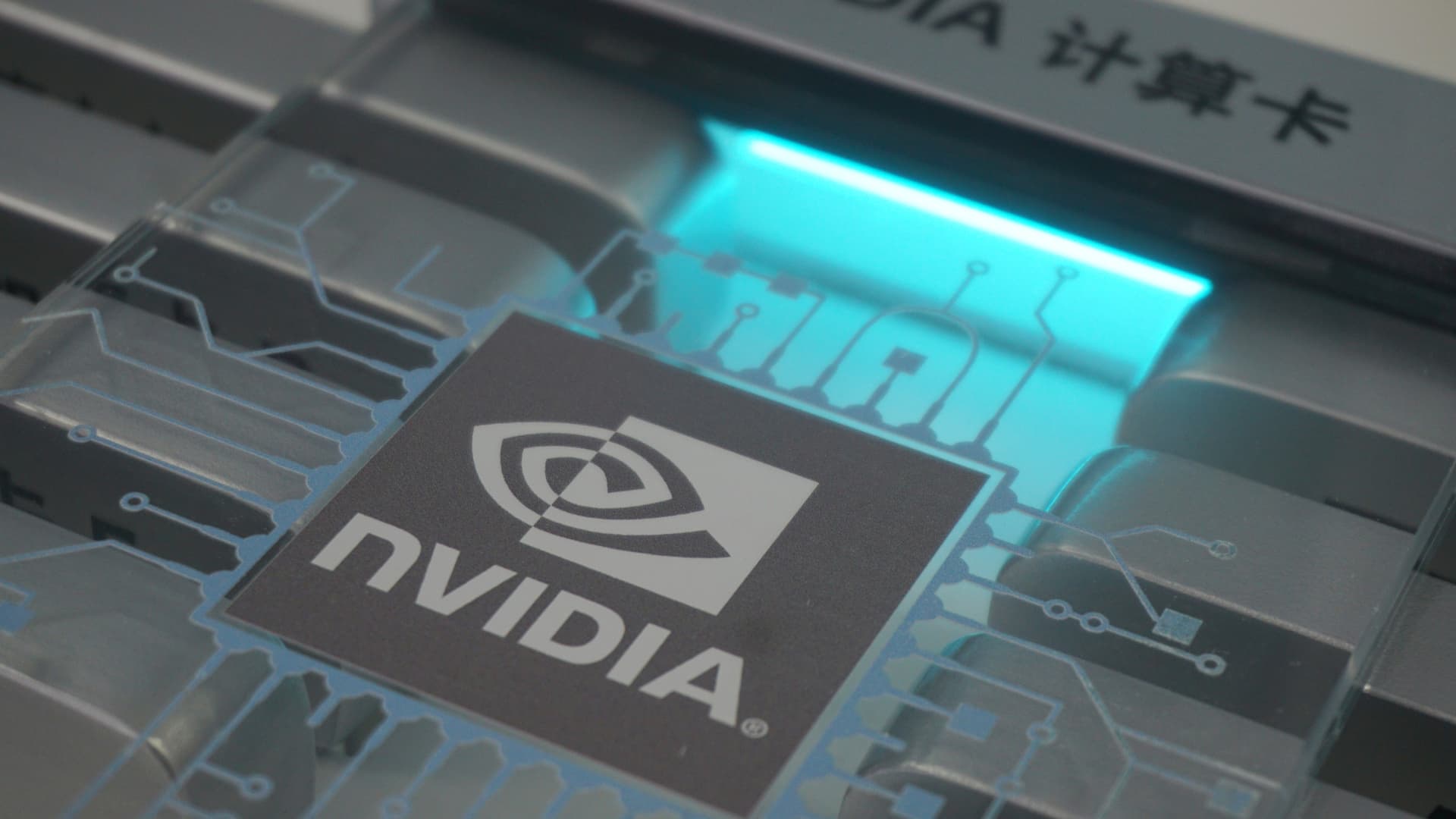
NVIDIA AI Computing Card captured in Hangzhou, Zhejiang Province, China on Dec. 9, 2025.
Cfoto | Future Publishing | Getty Images
The U.S. Attorney’s Office for the Southern District of New York has charged associates of an unidentified U.S. server maker with illegally diverting billions of dollars in artificial intelligence servers to China.
The U.S. government has been trying to figure out how high-powered chips have reached China without authorization, as American companies such as Anthropic and OpenAI face challenges from DeepSeek and other Chinese rivals.
In an indictment unsealed on Thursday, the U.S. government alleged that Yih-Shyan “Wally” Liaw, Ruei-Tsan “Steven” Chang and Ting-Wei “Willy” Sun worked together to violate the Export Control Reform Act.
Liaw is a co-founder of server maker Super Micro Computer and a member of its board of directors. He controls $464 million worth of Super Micro shares, according to FactSet. He did not respond to a request for comment.
Super Micro said that while the company isn’t named as a defendant, Liang works as senior vice president of business development, while Chang is a sales manager in Taiwan and Sun is a contractor.
“Supermicro has placed the two employees on administrative leave and terminated its relationship with the contractor, effective immediately,” according to a statement. The company said that the behavior in the indictment goes against its policies and that it’s committed to following export control rules.
A Southeast Asian company, acting as a middleman, compiled fake paperwork to appear as if it would be using the servers and had a separate logistics firm repackage the servers to conceal them before going to China, according to the indictment.
The defendants tried to fool the server maker’s compliance team with “dummy” servers at the Southeast Asian company’s storage facilities, while the real servers had already been forwarded to China, and pressured the compliance team into approving shipments, according to the indictment.
Nvidia’s graphics processing units have been in demand across the world for training generative AI models.
The server company’s products containing Nvidia chips “are subject to strict U.S. export controls barring their sale to China without a license,” the plaintiff said in the indictment. “Those controls are in place to protect U.S. national security and foreign policy interests, among other things.”
U.S. President Donald Trump initially sought to prevent China from obtaining the processors. But in December he said he told China’s President Xi Pinging that the U.S. would permit Nvidia to ship H200 GPUs to China, “under conditions that allow for continued strong National Security.” Earlier this week Nvidia CEO Jensen Huang said the chipmaker is restarting manufacturing to fulfill H200 purchase orders from China.
Last summer, Nvidia had received licenses to export the H20 chip to China, with Huang agreeing to provide the U.S. with 15% of its sales in China.
This is breaking news. Please refresh for updates.