


This is CNBC’s Morning Squawk newsletter. Subscribe here to receive future editions in your inbox.
Happy Monday. National park enthusiasts, take note: The White House is considering a land swap in Yosemite with a private developer.
Stock futures are lower this morning following a positive week for all three major indexes.
Here are five key things investors need to know to start the trading day:
1. Tar Heel talks
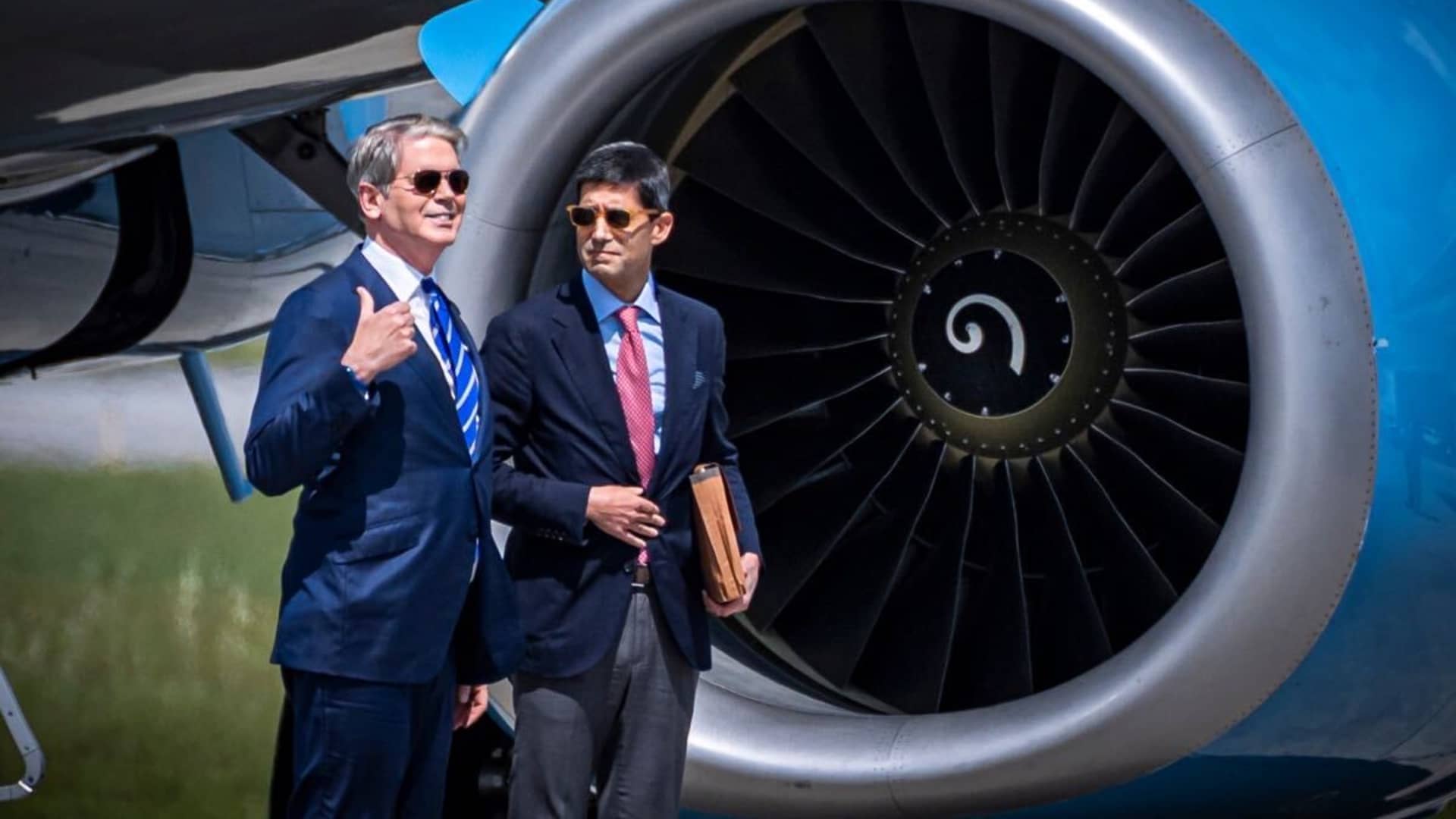
Treasury Secretary Scott Bessent and Federal Reserve Chair Kevin Warsh enroute for the G20 Finance Ministers and Central Bank Governors meetings in Asheville, North Carolina on Aug. 30th, 2026.
Financial leaders and monetary policymakers are convening this week for G20 meetings in Asheville, North Carolina, where U.S. tariffs on trading partners and sanctions on Iran are likely to be key topics.
Here’s what to know:
2. August rush
Traders work at the New York Stock Exchange on Aug. 25, 2026.
NYSE
It’s the last day of August, and Wall Street is poised to log a winning — albeit turbulent — month. Leading stocks higher in August was the tech sector, including sizable gains from Nvidia, Microsoft and Micron.
The tech-heavy Nasdaq Composite and S&P 500 have climbed around 4% and 3%, respectively, in August, putting them both on track for their first winning months in three. The Dow Jones Industrial Average has added about 2%, which would make for its fifth consecutive winning month.
But it may be a bumpy finish: Stock futures are sliding this morning following renewed fighting in Iran. Follow live market updates here.
3. More strikes
The tanker LNG ENTERPRISE unloads liquefied natural gas from the Lake Freeport LNG terminal in the United States at the Revithoussa terminal near Athens, Greece, on May 2, 2026. With the conflict in Iran causing disruptions to global gas supplies, US LNG deliveries to Europe have become significant.
Nurphoto | Nurphoto | Getty Images
Iran reportedly targeted two U.S. bases in Jordan today after American forces struck a pair of rocket launchers on Tehran’s Larak Island, marking the first time the U.S. and Iran have exchanged strikes in more than a month.
The U.S. strikes on Sunday, confirmed to MS NOW by U.S. Central Command, came as the U.S. military was concerned that Iranian forces were readying to launch rockets carrying sea mines into the Strait of Hormuz.
Oil prices are more than 3% higher this morning following the strikes. Trump on Friday also announced a deal with Venezuela for control of more than 65 billion barrels of oil reserves. Trump said the deal would come “at no cost to” U.S. taxpayers.
4. Dimmed screen
Demonstrators hold up “Stop Data Centers” signs as US President Donald Trump, not pictured, speaks at the General Motors Proving Ground testing facility in Milford, Michigan, US, on Monday, July 27, 2026.
Sarah Rice | Bloomberg | Getty Images
Technology executives have long pitched their products as a way to make the world better. But CNBC’s Ashley Capoot writes that Americans are increasingly feeling the opposite, as backlash to artificial intelligence compounds with social media’s “Big Tobacco” moment.
A recent report from Pew Research Center found that more than half of Americans said they are more concerned than excited about the increasing use of AI in daily life, up from 37% in 2021. A CNBC survey of young adults in the U.S., meanwhile, found that their confidence in executives of AI companies is even lower.
On top of that, there are growing worries about the impact of social media use on young people. Meta last week agreed to a nearly $17 billion settlement in a social media addiction case brought by a group of state attorneys general. Mike Moore, the former Mississippi attorney general who took on Big Tobacco, is now helping state AGs craft a potential master settlement with social media companies.
5. Alphabet soup
Economists have long described the post-pandemic economic recovery as “K”-shaped. Now, there’s less agreement on the shape of the economy, as some wonder if a “C” or “E” is more fitting. It can start to feel like “alphabet soup,” Joel Mokyr, a Nobel Prize-winning economic historian, told CNBC.
The use of letters to describe the state of the economy has been around for decades. Choosing a letter to describe the economy tends to be popular following a recession, but it’s unusual for the shape to be widely discussed years into a recovery. The fact that it’s happening today may underscore the rising awareness of wealth inequality in the U.S.
The Daily Dividend
Here’s what we’re following this week:
— CNBC’s Laya Neelakandan, Justin Papp, Garrett Downs, Fred Imbert, Anniek Bao, Justina Lee, Ashley Capoot, Sawdah Bhaimiya and Jonathan Vanian contributed to this report.
Luke Fountain assisted in the production of this newsletter. Josephine Rozzelle edited this edition.