



California and seven other states filed an emergency motion on Friday to stop the merger of broadcasting companies Nexstar and Tegna, a corporate tie-up that would create the country’s largest operator of local television stations.
The eight attorneys general filed the motion for a temporary restraining order less than a day after the Federal Communications Commission and the Department of Justice signed off on the $6.2 billion deal.
Nexstar and Tegna did not immediately respond to requests for comment.
The states — California, Colorado, Illinois, Oregon, New York, North Carolina, Connecticut and Virginia — argued in a lawsuit filed Wednesday night that the merger violates federal antitrust laws and warned of price hikes for consumers.
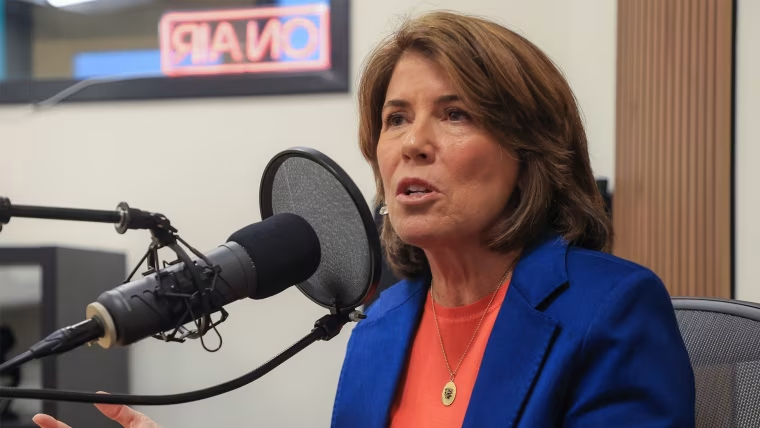
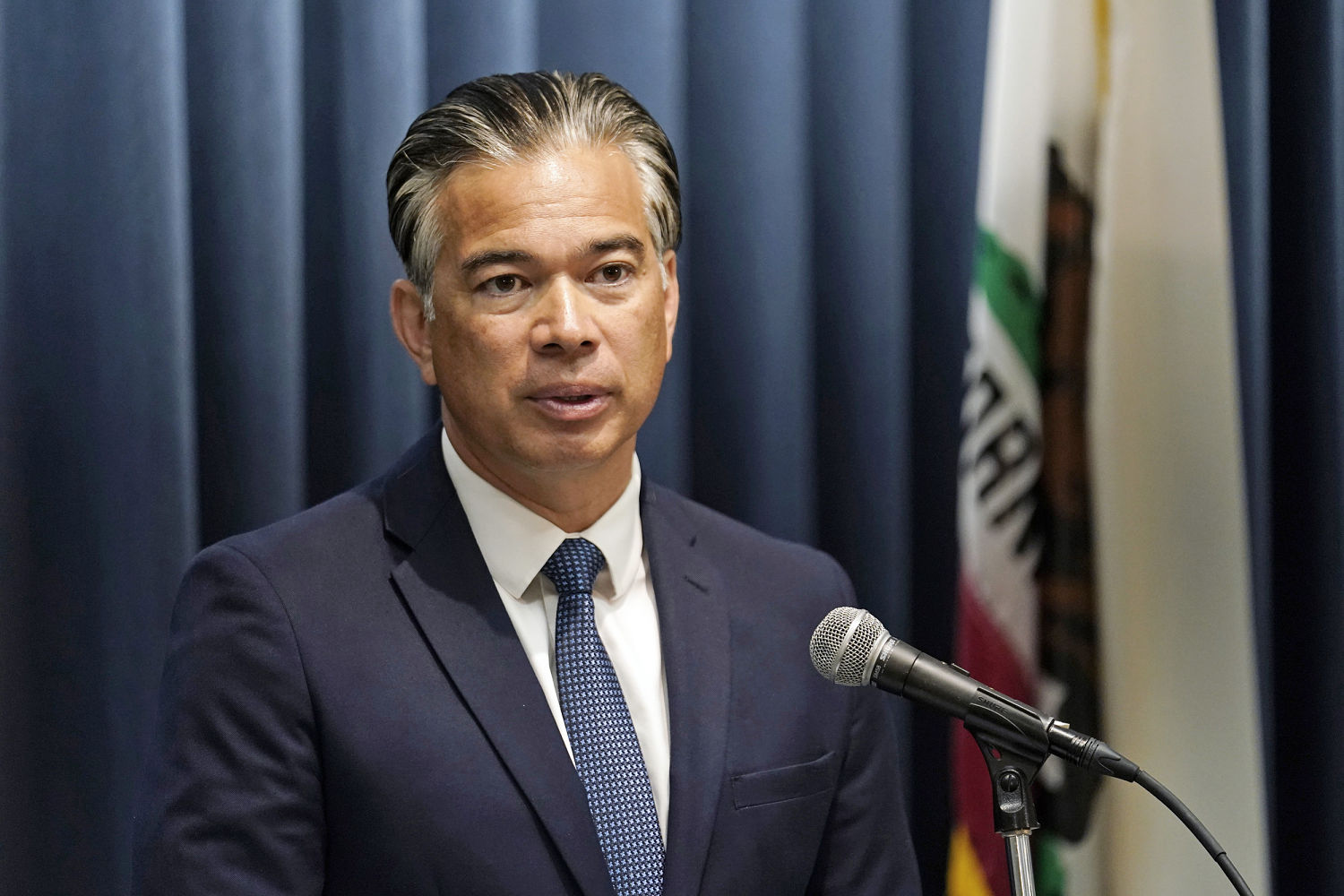
“With its approval of the disastrous Nexstar/Tegna broadcasting merger, the Trump Administration has once again put corporate interests ahead of the interests of everyday Americans — not on our watch,” California Attorney General Rob Bonta said in a statement.
“This merger is illegal, plain and simple, running contrary to federal antitrust laws that protect consumers. Nexstar/Tegna is not a done deal. I will not let these corporate behemoths merge without a fight,” Bonta added.
Nexstar announced Thursday night that it had secured approval from FCC and Justice Department regulators. The FCC publicly announced the news, while the Justice Department has not responded to requests for comment.
In a news release, FCC Chairman Brendan Carr said the agency waived a federal rule that bars a single company from owning TV stations reaching more than 39% of U.S. households. Nexstar and Tegna’s combined assets would cover at least 60%.
“Waiving that rule here is consistent with longstanding FCC authorities and doing so promotes the underlying purpose of the FCC’s media regulations by promoting competition, localism, and diversity,” Carr said in a statement.
Anna M. Gomez, the lone Democrat on the FCC, blasted the agency’s decision to sign off on the Nexstar-Tegna deal, criticizing what she characterized as a lack of transparency around the approval process.
“The FCC has once again chosen bureaucratic cover over public accountability,” Gomez said in a statement. “This merger was approved behind closed doors with no open process, no full Commission vote, and no transparency for the consumers and communities who will bear the consequences.”
President Donald Trump publicly endorsed the deal last month. “We need more competition against THE ENEMY, the Fake News National TV Networks,” the president wrote in a social media post. “GET THAT DEAL DONE!”
The nation’s local TV operators are under pressure as they compete for viewers and advertising revenue in a marketplace increasingly dominated by digital players like Netflix, YouTube and TikTok.
But the state attorneys general believe consolidation would “put more broadcast programming in the hands of fewer people, cut local jobs, increase cable bills, and significantly impact the delivery of news and other media content to Americans.”
Bonta said two California media markets would be especially affected by the Nexstar-Tegna merger. In the Sacramento market, the combined entity would own the local Fox and ABC stations; in the San Diego area, it would own the local Fox and CBS stations.
Nexstar operates 201 stations in 116 television markets while Tegna operates 64 full-power broadcast television stations, an AM radio station and an FM radio station. Carr has said Nexstar agreed to divest “a number of stations.”
In recent months, state attorneys general have asserted themselves on other issues at the nexus of antitrust and the media industry.
More than two dozen Republican and Democratic state attorneys general filed a motion for a mistrial in an antitrust case that aimed to break up Live Nation and Ticketmaster. Live Nation ultimately settled with the Justice Department.
Bonta’s office is also investigating Paramount Skydance’s deal to take over Warner Bros. Discovery, a merger that would unite two historic Hollywood movie studios and potentially put CNN under the same corporate roof as CBS News.